A napelem akkumulátor utólagos beépítés az azt jelenti, hogy akkumulátoros tárolót adsz a már meglévő napelemeidhez. Sok esetben megtarthatod a paneleket. Az, hogy megtarthatod-e az invertert, egy kicsit több ellenőrzést igényel.
Ismerős helyzet: a paneleid ebédidőben dolgoznak, miközben te távol vagy. Mire hazaérsz, megfőzöd a vacsorát és bekapcsolod a tévét, újra az áramhálózatról vásárolsz villamos energiát.
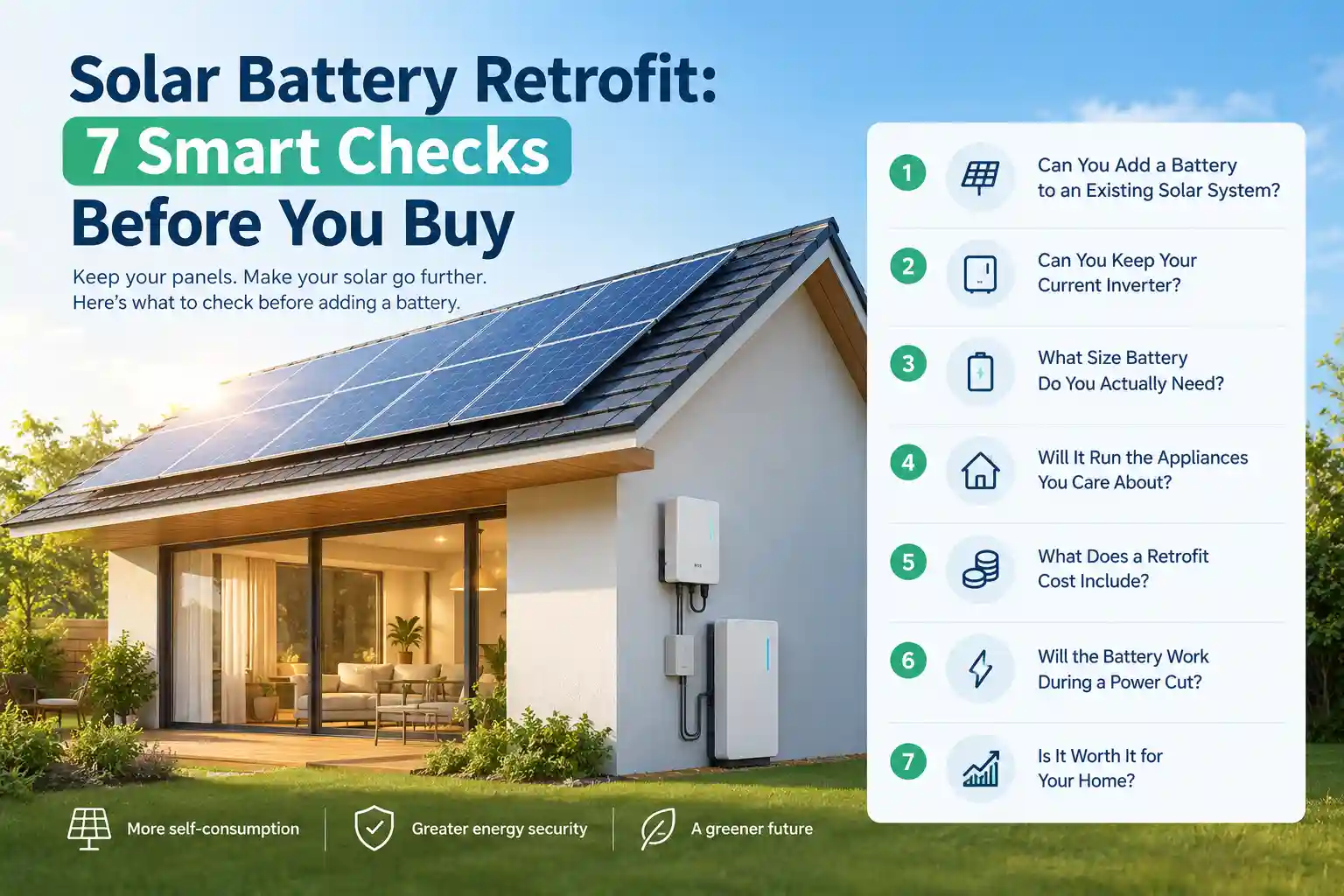
Egy akkumulátor megőrizheti a nappali napenergiát későbbre. De mielőtt választanál egyet, itt van hét dolog, amit érdemes ellenőrizni.
1. Hozzáadhatsz-e akkumulátort egy meglévő napelemes rendszerhez?
Általában igen – feltéve, hogy a berendezés és a telepítés ezt támogatja. Nem feltétlenül kell újrakezdened.
Három gyakori út van:
| Ami most van nálad | Lehetséges következő lépés |
|---|
| Akkumulátorral kompatibilis hibrid inverter | Adj hozzá az adott modellhez jóváhagyott akkumulátort |
| Standard napelemes inverter | Tartsd meg, és adj hozzá megfelelő AC-kapcsolt akkumulátoros berendezést |
| Cserére szoruló inverter | Fontold meg egy kompatibilis hibrid inverter és akkumulátor együttesét |
Az AC-kapcsolt rendszer egy külön vagy beépített akkumulátor-invertert használ, amely az AC oldalon csatlakozik a rendszeredhez. Ez lehetővé teszi, hogy a meglévő napelemes berendezésed a helyén maradjon. Az Enphase napelem és akkumulátor útmutatója elmagyarázza ezt a megközelítést.
A DC-kapcsolt rendszer általában kompatibilis hibrid invertert használ. Akárhogy is, egy standard napelemes inverter nem tud egyszerűen bármilyen hozzá csatlakoztatott akkumulátort tölteni.
2. Megtarthatod-e a jelenlegi inverteredet?
Kezdd azzal, hogy készítesz egy fotót a címkéjéről. A pontos modell fontosabb, mint a márka.
Még egy “akkumulátorra kész” inverter is csak bizonyos akkumulátorokat támogat. Kérd meg a telepítőt, hogy ellenőrizze a feszültséget, töltési korlátokat, kommunikációs követelményeket és a firmware-t.
AC-kapcsolt frissítés esetén az akkumulátornak meg kell egyeznie az akkumulátor-inverterrel, és az egész rendszernek működnie kell a meglévő napelemes rendszereddel.
Kérdezd meg azt is, hogy a változtatások befolyásolják-e a jelenlegi garanciádat. Egy ötperces ellenőrzés jobb, mint egy drága meglepetés.
Mi az akkumulátor és inverter kompatibilitási útmutató végigvezeti a részleteken.
3. Mekkora akkumulátorra van valójában szükséged?
Mielőtt összehasonlítanád az akkumulátorokat, nyisd meg a napelemes monitoring alkalmazásodat. Nézd meg, mennyi áramot exportálsz napközben, és mennyit vásárolsz naplemente után.
Itt egy szemléltető példa:
| Napi olvasat | Example |
|---|
| Surplus solar exported | 7kWh |
| Evening electricity use | 5 kWh |
| Starting point for assessment | Storage capable of delivering around 5kWh to evening loads |
That does not automatically mean buying a battery labelled “5kWh.”
Nominal capacity is the headline figure. Usable capacity reflects the manufacturer’s operating limits. Inverter losses and any backup reserve further affect what reaches your appliances. Don’t deduct the same discharge allowance twice if it is already included in usable capacity.
Check different seasons, too. A sunny July afternoon won’t tell you much about a cloudy winter week.
Mi otthoni akkumulátor méretezési útmutatónk can help you work through the numbers.
4. Will It Run the Appliances You Care About?
Capacity and power are different things.
kWh tells you how much energy is stored. kW tells you how quickly the system can supply it.
A battery might hold enough energy for an evening but still be unable to run the oven, kettle and other large appliances together.
Give your installer a list of what you want to run. Ask about continuous output and the extra power some appliances need when starting.
5. What Does a Solar Battery Retrofit Cost Include?
The battery price is only part of the bill. Ask for an itemised quotation covering:
- Battery and usable capacity.
- Additional or replacement inverter.
- Controls, metering and electrical protection.
- Installation and any switchboard work.
- Backup equipment, if requested.
- Delivery, taxes and applicable approvals.
Energy Saving Trust’s battery storage guide provides useful background, although its pricing and local recommendations apply to the UK.
You can also review the Fench Energy 51.2V 5.12kWh LiFePO4 solar battery when comparing equipment. Its nominal capacity does not confirm compatibility, and the battery price is not a complete installation quote.
6. Will the Battery Work During a Power Cut?
Not automatically. Some installations store solar energy for everyday use but provide no backup.
Ordinary grid-connected solar generally shuts down during an outage to avoid feeding electricity into the disconnected grid. Backup requires a suitable system design, which may include switching equipment, a dedicated backup output and selected circuits.
Ask two questions: “Which appliances will stay on?” és a “Can the solar panels recharge the battery while the grid is down?”
Victron’s storage-system documentation illustrates why the answer depends on how the system is arranged.
7. Is a Solar Battery Retrofit Worth It for Your Home?
It deserves a closer look if you export plenty of daytime solar for little payment, then buy electricity at a higher price in the evening.
If you already use most of your solar directly, there is less surplus to store.
Compare expected savings using your own electricity rates, export payments, storage losses and installed quotation. Backup may also matter to you, but treat that benefit separately from bill savings.
Before buying, send Fench Energy your inverter model, installation country and whether you want evening storage, backup, or both. Request the relevant specifications and compatibility confirmation, then have a qualified local installer review the complete upgrade.




 English
 Polish
 Romanian
 German
 Dutch
 French
 Bulgarian
 Croatian
 Greek
 Czech
 Danish
 Estonian
 Finnish
 Swedish
 Hungarian
 Irish
 Italian
 Latvian
 Lithuanian
 Luxembourgish
 Maltese
 Portuguese
 Slovak
 Slovenian
 Spanish