


As baterias LiFePO4 podem ser usadas em clima frio? Um guia completo de inverno para baterias LiFePO4
Inverno da bateria LiFePO4 O desempenho é uma consideração importante para quem usa baterias de fosfato de ferro de lítio em climas frios. Seja para uma bateria de RV, sistema de armazenamento de energia solar, aplicação fora da rede ou sistema de energia de backup, baixas temperaturas podem afetar a capacidade da bateria, carregamento, tempo de funcionamento e desempenho geral.
Então, as baterias LiFePO4 podem ser usadas no inverno?
Sim. As baterias LiFePO4 podem ser usadas em clima frio, mas precisam ser operadas dentro da faixa de temperatura especificada pelo fabricante. Em particular, carregar uma bateria LiFePO4 em temperaturas abaixo de zero requer atenção especial.
Para uma configuração confiável Inverno da bateria LiFePO4 você deve entender a diferença entre carregamento e descarga em clima frio, verificar a temperatura de operação da bateria e escolher uma bateria com proteção adequada para baixas temperaturas.

O que acontece com as baterias LiFePO4 no inverno?
Entender Inverno da bateria LiFePO4 o desempenho começa por compreender como as baixas temperaturas afetam as células.
À medida que a temperatura diminui, as reações eletroquímicas dentro de uma bateria LiFePO4 tornam-se mais lentas. Isso aumenta a resistência interna e pode reduzir temporariamente a quantidade de energia e potência que a bateria pode fornecer.
Durante o inverno, você pode notar:
- Capacidade disponível da bateria mais baixa
- Potência de descarga reduzida
- Maior queda de voltagem sob cargas pesadas
- Tempo de funcionamento mais curto
- Carregamento mais lento
- Eficiência geral mais baixa em temperaturas extremamente baixas
Esses efeitos não significam necessariamente que a bateria está danificada. Em muitos casos, o desempenho melhora à medida que a bateria retorna a uma temperatura de operação mais quente.
É por isso que o desempenho da bateria LiFePO4 no inverno depende não apenas da capacidade nominal da bateria, mas também da temperatura das células durante a operação real.
Por exemplo, uma bateria LiFePO4 de 100Ah pode não fornecer o mesmo tempo prático de funcionamento em condições extremamente frias como forneceria em temperatura ambiente.
Qual é a temperatura de operação da bateria LiFePO4?
A temperatura de operação de uma bateria LiFePO4 varia dependendo do fabricante da célula, design da bateria, BMS e aplicação.
Muitas baterias LiFePO4 têm especificações semelhantes a estas:
| Operating Condition | Typical Range |
|---|---|
| Discharging | Around -20°C to 60°C |
| Charging | Usually 0°C to 45°C |
| Storage | Depends on manufacturer |
These values are only general examples. Always check the manufacturer’s technical datasheet for the exact temperature limits of your battery.
For Inverno da bateria LiFePO4 applications, the charging temperature is particularly important.
A battery may be capable of discharging at temperatures below freezing while still being unable to safely accept a charge at the same temperature.
Therefore, when selecting a battery for winter use, do not look only at the maximum and minimum operating temperature. Check the charging temperature and discharging temperature separately.
Can LiFePO4 Batteries Be Charged in Cold Weather?
One of the most important questions about Inverno da bateria LiFePO4 use is whether the battery can be charged when temperatures fall below freezing.
For standard LiFePO4 batteries, charging below 0°C (32°F) is generally not recommended unless the battery has been specifically designed for low-temperature charging.
This is because charging lithium batteries at temperatures below freezing can cause lithium plating inside the cells. Repeated low-temperature charging can permanently reduce capacity and may affect battery life and safety.
For this reason, a properly designed Inverno da bateria LiFePO4 system should have a method of preventing charging when the battery is too cold.
How Does Low-Temperature Charging Protection Work?
A battery with a temperature-protected BMS can monitor the cell temperature during operation.
When the temperature falls below the minimum charging limit, the BMS may automatically:
- Detect the low battery temperature
- Stop the charging process
- Prevent current from entering the cells
- Resume charging after the battery reaches a safe temperature
This protection is particularly useful for RVs, outdoor solar systems, off-grid systems, and other applications where batteries may be exposed to winter temperatures.
If you regularly need Inverno da bateria LiFePO4 charging, look for a battery that includes low-temperature charging protection or an integrated heating system.
Do LiFePO4 Batteries Work Below Freezing?
Yes, many LiFePO4 batteries can still discharge below freezing, provided the temperature remains within the manufacturer’s specified discharge range.
However, LiFePO4 battery winter performance will usually be lower than performance at moderate temperatures.
Cold temperatures can result in:
- Lower usable capacity
- Higher internal resistance
- Greater voltage sag
- Reduced peak power
- Tempo de funcionamento mais curto
The reduction in performance can vary depending on the battery design and operating conditions.
For example, a battery powering a high-current load may experience more noticeable voltage drop in cold weather than the same battery operating at a moderate temperature.
This is an important consideration when designing a Inverno da bateria LiFePO4 system for high-power equipment.
LiFePO4 Battery Winter Performance and Runtime
Battery runtime is another important factor to consider during winter.
When temperatures fall, the available capacity of a LiFePO4 battery can decrease. As a result, a battery that normally provides a certain amount of runtime may provide less usable energy in very cold conditions.
However, this does not necessarily mean that the battery has permanently lost capacity.
In many cases, cold-weather performance is temporary. Once the battery warms up to a suitable operating temperature, its available capacity and power output can improve.
Therefore, when evaluating Inverno da bateria LiFePO4 performance, consider both the battery temperature and the expected load.
For applications with high energy demands, it is especially important to leave enough capacity margin instead of sizing the battery only according to ideal room-temperature conditions.
How to Use LiFePO4 Batteries in Winter
Proper installation can make a significant difference to Inverno da bateria LiFePO4 performance.
If you plan to use a LiFePO4 battery during winter, follow these practical recommendations.
1. Install the Battery in a Protected Location
Whenever possible, install the battery in an enclosed and protected area.
Avoid placing the battery where it is directly exposed to:
- Snow
- Freezing rain
- Strong wind
- Extreme overnight temperatures
- Uncontrolled outdoor conditions
A protected installation can help keep the battery within a more stable temperature range.
2. Avoid Charging a Frozen Battery
Never assume that a battery can be charged simply because it can still discharge.
If the battery temperature is below its specified minimum charging temperature, allow the battery to warm up before charging.
This is one of the most important rules for safe Inverno da bateria LiFePO4 operation.
3. Use Low-Temperature BMS Protection
A reliable BMS should monitor battery temperature and provide protection against unsafe charging conditions.
For winter applications, look for:
- Low-temperature charging cutoff
- Temperature sensors
- Over-temperature protection
- Over-current protection
- Short-circuit protection
4. Consider a Heated Battery
For very cold environments, a LiFePO4 battery with integrated heating can be a useful option.
The heating system can warm the cells before charging, allowing the battery to operate more reliably in extremely cold conditions.
This type of design can be particularly useful for a Inverno da bateria LiFePO4 system used in an RV, cabin, remote solar installation, or outdoor energy storage application.
5. Follow the Manufacturer’s Datasheet
Every LiFePO4 battery is different.
Before installing a battery in a cold climate, check:
- Minimum charging temperature
- Minimum discharge temperature
- Maximum charging temperature
- Maximum discharge temperature
- Temperatura de armazenamento
- BMS protection functions
The manufacturer’s specifications should always take priority over general temperature guidelines.
LiFePO4 Battery for RV and Winter Camping
A LiFePO4 battery for RV applications is popular because of its long cycle life, high usable capacity, and relatively low weight compared with traditional lead-acid batteries.
However, RV owners need to pay particular attention to Inverno da bateria LiFePO4 conditions.
RV batteries may be installed in external compartments where temperatures can fall below freezing. If the RV is used during winter, the battery may therefore experience cold temperatures for several hours.
For winter RV use, look for a battery with:
- Low-temperature charging protection
- Reliable BMS
- Temperature monitoring
- Suitable discharge temperature range
- Optional or integrated heating
If your RV battery is installed in an enclosed compartment, insulation and proper installation can also help reduce exposure to extreme temperatures.
LiFePO4 Battery for Cold Climates
A LiFePO4 battery for cold climates needs to be selected according to the lowest temperature expected at the installation site.
Cold-climate applications may include:
- RVs and camper vans
- Off-grid solar systems
- Cabins
- Remote power systems
- Outdoor energy storage
- Backup power systems
- Telecommunications equipment
For these applications, Inverno da bateria LiFePO4 performance should be evaluated before purchase rather than after installation.
If temperatures regularly fall below freezing, low-temperature charging protection becomes particularly important.
For extremely cold locations, consider a battery system with heating capability and temperature-controlled charging.
What Temperature Is Too Cold for LiFePO4 Batteries?
There is no single temperature that applies to every LiFePO4 battery.
As a general reference:
Below 0°C (32°F): charging is normally restricted unless the battery is specifically designed for low-temperature charging.
Around -20°C (-4°F): many LiFePO4 batteries reach the lower end of their specified discharge range.
Below the manufacturer’s minimum temperature: normal operation should be avoided.
The exact limits depend on the cell chemistry, BMS, battery construction, and manufacturer.
Therefore, the safest approach for Inverno da bateria LiFePO4 use is to follow the exact temperature specifications provided for the specific battery model.
How to Choose a LiFePO4 Battery for Winter
If you live in a cold climate or plan to use your battery during winter, don’t choose a LiFePO4 battery based only on capacity and price.
Instead, evaluate the following specifications.
Charging Temperature
Check the minimum temperature at which the battery can safely accept a charge.
This is one of the most important specifications for Inverno da bateria LiFePO4 applications.
Discharging Temperature
Make sure the battery’s specified discharge range covers the lowest temperature expected at the installation location.
Low-Temperature Protection
A BMS with temperature monitoring can automatically stop charging when the cells become too cold.
Battery Heating
For severe winter environments, integrated heating can help maintain a suitable cell temperature before charging.
Technical Documentation
A reliable battery manufacturer should clearly provide:
- Charging temperature
- Discharging temperature
- Temperatura de armazenamento
- BMS specifications
- Ciclo de vida
- Product certifications
- Installation instructions
Clear technical documentation is especially important when purchasing LiFePO4 batteries for commercial or bulk applications.
Common LiFePO4 Battery Winter Mistakes
1. Charging a Cold Battery
Charging below the specified minimum temperature is one of the most important mistakes to avoid.
If you are building a Inverno da bateria LiFePO4 system, make sure the BMS can prevent unsafe low-temperature charging.
2. Assuming Charging and Discharging Have the Same Limits
They do not.
A battery may be able to discharge at a temperature where charging is not permitted.
3. Ignoring the Installation Environment
A battery installed outdoors can experience much lower temperatures than a battery installed inside a temperature-controlled room.
4. Expecting Summer Runtime
Cold weather can temporarily reduce available capacity and power output.
Therefore, a Inverno da bateria LiFePO4 installation may require additional capacity if the system needs to maintain the same practical runtime throughout the year.
5. Buying Without Checking the BMS
For cold-climate applications, temperature protection should be one of the key battery selection criteria.
FAQ About LiFePO4 Battery Winter Use
Can LiFePO4 batteries be used in winter?
Yes. LiFePO4 batteries can generally be used during winter, provided that the battery remains within its specified operating temperature range. Inverno da bateria LiFePO4 performance may be lower in extremely cold conditions.
Can LiFePO4 batteries be charged below freezing?
Generally, no. Charging below 0°C (32°F) should be avoided unless the battery is specifically designed with low-temperature charging protection or heating.
Do LiFePO4 batteries work below freezing?
Yes. Many LiFePO4 batteries can discharge below freezing, but available capacity, voltage stability, and power output may decrease.
What is the best LiFePO4 battery for winter?
The best battery depends on the application and climate. For Inverno da bateria LiFePO4 use, look for low-temperature charging protection, temperature monitoring, a reliable BMS, and heating functionality when necessary.
How can I improve LiFePO4 battery winter performance?
Protect the battery from extreme cold, prevent charging below the specified temperature, use appropriate BMS protection, and consider a heated battery for severe winter conditions.
Data sources for this blog:
Battery Backup for Refrigerator: What Size Do You Need?
A battery backup for refrigerator use must do two jobs: start the compressor and keep the fridge running through an
LiFePO4 vs Lead Acid for Solar: Is Upgrading Worth It?
Comparing LiFePO4 vs lead acid for solar usually starts with a practical problem: your batteries no longer last through the
Can You Install a Home Battery in an Unheated Garage?
Installing a home battery in a garage can make sense. It keeps the equipment out of your living space, and
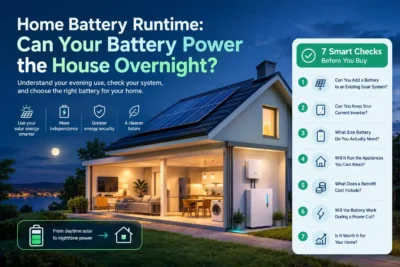
Duração da bateria doméstica: Sua bateria pode alimentar a casa durante a noite?
Home battery runtime depends on how much usable energy you have and what you run. A battery may keep the

Retrofit de bateria solar: 7 verificações inteligentes antes de comprar
A solar battery retrofit means adding battery storage to solar panels you already have. In many cases, you can keep

Is a 5kWh Home Battery Enough? 5 Essential Checks Before Buying
A 5kWh home battery can cover modest evening electricity use or keep selected essentials running during a power cut. Whether
 English
 Polish
 Romanian
 German
 Dutch
 French
 Bulgarian
 Croatian
 Greek
 Czech
 Danish
 Estonian
 Finnish
 Swedish
 Hungarian
 Irish
 Italian
 Latvian
 Lithuanian
 Luxembourgish
 Maltese
 Portuguese
 Slovak
 Slovenian
 Spanish