


Dynamiczne taryfy na energię elektryczną z domową baterią mogą pomóc właścicielom domów obniżyć rachunki za prąd, magazynując energię, gdy ceny są niskie, i wykorzystując ją, gdy ceny rosną. W 2026 roku połączenie domowej baterii z odpowiednią taryfą na energię elektryczną może również pomóc gospodarstwom domowym lepiej wykorzystać energię słoneczną i zmniejszyć zależność od drogiej energii z sieci.
Jednakże, domowa bateria nie gwarantuje automatycznie niższych rachunków za energię. . Twoje potencjalne oszczędności zależą od różnic w cenach energii, efektywności baterii, zużycia w gospodarstwie domowym, kosztów instalacji oraz skuteczności zarządzania ładowaniem i rozładowaniem systemu.
W tym przewodniku wyjaśniamy, jak działają dynamiczne taryfy na energię elektryczną z domową baterią, jak obliczyć potencjalne oszczędności oraz co należy rozważyć przed inwestycją w magazynowanie energii w domu.
Czym są dynamiczne taryfy na energię elektryczną z domową baterią?
Dynamiczne taryfy na energię elektryczną z domową baterią oznaczają korzystanie z domowej baterii wraz z umową na energię elektryczną, której ceny energii zmieniają się w czasie. W zależności od dostawcy i umowy ceny energii mogą zmieniać się co godzinę lub w krótszych odstępach czasu.
W przeciwieństwie do taryfy o stałej stawce, taryfa dynamiczna pozwala konsumentom korzystać z okresów, gdy ceny energii są niższe. Jednak ceny mogą również wzrosnąć, co stwarza potencjalne ryzyko dla gospodarstw domowych, które nie mogą dostosować swojego zużycia energii.
Na przykład ceny energii mogą spaść, gdy produkcja energii odnawialnej jest wysoka, a popyt niski. Ceny mogą wzrosnąć w okresach wysokiego zapotrzebowania lub ograniczonej podaży.
Zgodnie z wytycznymi Komisji Europejskiej dotyczącymi rynku energii elektrycznej, reformy europejskiego rynku energii elektrycznej mają na celu zapewnienie konsumentom większego wyboru i ochrony przy wyborze umów na energię elektryczną.
Przed wyborem taryfy dynamicznej sprawdź, czy Twój dostawca oferuje ją w Twojej okolicy, czy wymagany jest licznik inteligentny oraz jak opłaty sieciowe, podatki i inne opłaty wpływają na ostateczny rachunek za energię.
Jak działają dynamiczne taryfy na energię elektryczną z domową baterią?
Domowa bateria magazynuje energię elektryczną, aby można było jej użyć później. W połączeniu z kompatybilnym inwerterem i systemem zarządzania energią może pomóc przesunąć zużycie energii z drogich okresów na tańsze.
1. Ładuj domową baterię, gdy ceny energii są niskie
Dzięki odpowiedniej taryfie dynamicznej możesz ładować domową baterię w okresach niższych cen energii i korzystać z magazynowanej energii, gdy ceny rosną.
Na przykład gospodarstwo domowe może ładować baterię w nocy, gdy energia jest tańsza, i używać zgromadzonej energii w drogim okresie wieczornym.
Potencjalna korzyść zależy od różnicy cen między okresami ładowania i rozładowania, efektywności baterii oraz dodatkowych opłat.
2. Magazynuj nadmiar energii słonecznej na później
Jeśli Twój dom ma panele słoneczne na dachu, bateria może magazynować nadmiar energii słonecznej wyprodukowanej w ciągu dnia do wykorzystania wieczorem lub wczesnym rankiem.
Bez baterii możesz eksportować nadmiar energii do sieci i kupować energię później. Czy magazynowanie tej energii jest bardziej ekonomiczne, zależy od wartości eksportowanej energii w porównaniu z kosztem zakupu energii z sieci.
Ważne jest dobranie odpowiedniej pojemności. Przeczytaj nasz przewodnik o ile magazynu energii w domu potrzebujesz aby zrozumieć, jak zużycie w gospodarstwie domowym i użyteczna pojemność baterii wpływają na rozmiar systemu.
3. Korzystaj z magazynowanej energii w drogich okresach
Gdy ceny energii rosną, Twoja bateria może zasilić część zapotrzebowania na energię elektryczną w gospodarstwie domowym, zmniejszając ilość energii, którą musisz kupić z sieci.
Niektóre systemy wspierają automatyczne ładowanie i rozładowanie na podstawie cen energii. Jednak nie każda bateria samodzielnie monitoruje taryfy dynamiczne lub automatycznie optymalizuje zużycie energii.
Przed zakupem upewnij się, że Twoja bateria, inwerter i oprogramowanie do zarządzania energią wspierają zamierzoną strategię ładowania.
Możesz także zbadać Fench Energy’s 51.2V 16kWh LiFePO4 solar battery as one option for residential energy storage. Check inverter compatibility, usable capacity, and control functionality before purchasing.
How Much Can Home Battery Dynamic Electricity Tariffs Save?
The potential savings depend on how much electricity you can shift from expensive periods to cheaper ones.
Consider this simplified example of charging a home battery from the grid.
| Pozycja | Example assumption |
|---|---|
| Electricity purchased for charging | 10 kWh |
| Low-price electricity rate | €0.12/kWh |
| High-price electricity rate | €0.30/kWh |
| Round-trip battery efficiency | 90% |
| Electricity delivered after losses | 9 kWh |
Step 1: Calculate the charging cost.
10 kWh × €0.12/kWh = €1.20
Step 2: Calculate the cost of buying the same delivered electricity at the higher rate.
9 kWh × €0.30/kWh = €2.70
Step 3: Calculate the gross benefit.
€2.70 − €1.20 = €1.50 per cycle
Under these assumptions, the gross benefit is €1.50 per cycle compared with buying the same 9 kWh directly at the higher electricity price.
However, this is not net profit. The calculation excludes battery degradation, installation costs, fixed charges, additional fees, and potential income from exporting solar electricity.
What Electricity Price Difference Makes Battery Charging Worthwhile?
Battery efficiency affects the minimum price difference needed to make grid charging economical.
Using the example above, the charging cost per delivered kilowatt-hour is:
€0.12 ÷ 90% ≈ €0.133/kWh
The higher electricity price must therefore exceed approximately €0.133/kWh to create a positive gross benefit under these assumptions.
In practice, the break-even price must be higher if additional variable charges and battery degradation costs apply.
For a more accurate estimate, compare your actual electricity import prices, export compensation, battery efficiency, and expected usage.
Ten ACER 2026 Monitoring Report on European retail energy markets discusses opportunities for consumers to benefit from dynamic pricing and shifting electricity consumption to lower-price periods.
Remember that savings from changing electricity consumption are not the same as savings generated by installing a home battery. Your actual results depend on your tariff, location, and energy usage.
Is a 5 kWh, 10 kWh, or 15 kWh Home Battery Better?
Choosing the right battery capacity is essential when evaluating home battery dynamic electricity tariffs. A larger battery does not automatically deliver greater savings because you may not use its additional capacity every day.
| Battery capacity | Potential use case |
|---|---|
| 5 kWh | Lower evening consumption or a smaller amount of surplus solar energy |
| 10 kWh | Moderate household consumption and regular solar storage |
| 15 kWh or more | Higher electricity demand, larger solar systems, or longer backup requirements |
These are general examples, not fixed recommendations. Your ideal battery size depends on daily electricity consumption, solar generation, usable capacity, charge and discharge power, and the amount of electricity you can economically shift between price periods.
Review your electricity bills and, if available, hourly or half-hourly consumption data before deciding.
What Should You Check Before Buying a Home Battery?
Before investing in a home battery for dynamic electricity tariffs, consider five important factors.
1. Usable battery capacity
Rated capacity is not always the same as the energy available to your appliances. Check usable capacity and the manufacturer’s operating limits.
2. Round-trip efficiency
Energy is lost during charging and discharging. Higher efficiency can improve the economics of storing electricity.
3. Inverter compatibility
Confirm that the battery works with your existing or planned inverter and supports the charging and discharging power your household requires.
4. Smart energy management
If you want automatic charging when electricity prices are low, check whether the system supports dynamic tariff integration, scheduled charging, or compatible third-party energy management software.
5. Battery lifespan, warranty, and safety
Review the warranty, operating temperature range, battery management system protection, applicable certifications, and battery aging characteristics.
Our guide to LiFePO4 battery lifespan explains how temperature, depth of discharge, and operating conditions can influence long-term battery performance.
Are Home Battery Dynamic Electricity Tariffs Worth It in 2026?
Home battery dynamic electricity tariffs may be attractive if you have rooftop solar panels, significant differences between low and high electricity prices, or household consumption that can be shifted to cheaper periods.
They may be less attractive if electricity prices remain similar throughout the day, your household uses little electricity, or the installed battery cost is too high relative to the potential savings.
Before purchasing, estimate your annual savings using your actual tariff and consumption data. Compare those savings with the total installed cost, expected battery lifespan, and potential maintenance or replacement expenses.
A battery may also provide backup power, but only if the system is designed and installed to support operation during a grid outage. Backup functionality depends on the inverter, electrical configuration, and installation requirements.
Frequently Asked Questions About Home Battery Dynamic Electricity Tariffs
Can I charge a home battery when electricity prices are low?
Yes, provided your battery, inverter, electricity connection, and energy management system support grid charging. Check your electricity supplier’s contract terms and any applicable network restrictions.
Can a home battery save money without solar panels?
Potentially. A battery can charge from the grid during cheaper periods and supply electricity when prices are higher. Whether this is economical depends on price differences, efficiency losses, fees, battery degradation, and system cost.
Do I need a smart meter for dynamic electricity tariffs?
Many dynamic tariffs require a smart meter or suitable interval-metering capability. Requirements vary by country and electricity supplier.
How long does a home battery take to pay for itself?
There is no universal payback period. It depends on total installed cost, annual savings, electricity prices, battery degradation, and any applicable incentives or export payments.
Can every home battery automatically follow dynamic electricity prices?
No. Automatic price-based charging depends on the capabilities of the inverter, battery management system, and energy management software. Confirm compatibility before buying.
Final Thoughts
Home battery dynamic electricity tariffs can create opportunities for homeowners to reduce energy costs, particularly when combined with solar panels and a compatible home battery.
The key is to choose a system that matches your household’s energy demand and supports your intended charging strategy. A larger battery is not necessarily more economical, and a lower electricity price does not automatically guarantee savings.
Compare your electricity tariff, review your energy consumption, and calculate the potential benefits before investing. With the right configuration, home energy storage can help you use electricity more strategically and make better use of your solar generation.
About the Author
Fench Energy Editorial Team
Fench Energy provides LiFePO4 battery solutions for residential solar storage and backup power applications. This guide helps homeowners understand dynamic electricity tariffs, battery economics, and important system selection considerations.
Editorial note: Electricity prices, tariff conditions, and battery performance vary by country and installation. The calculations in this article are illustrative examples, not financial guarantees or personalized energy advice.
Battery Backup for Refrigerator: What Size Do You Need?
A battery backup for refrigerator use must do two jobs: start the compressor and keep the fridge running through an
LiFePO4 kontra kwas ołowiowy do instalacji solarnych: czy warto przejść na nowszą technologię?
Porównanie LiFePO4 z akumulatorami kwasowo-ołowiowymi dla energii słonecznej zwykle zaczyna się od praktycznego problemu: twoje baterie już nie wytrzymują przez
Czy można zainstalować domową baterię w nieogrzewanym garażu?
Instalacja domowej baterii w garażu może mieć sens. Utrzymuje sprzęt poza przestrzenią mieszkalną, a
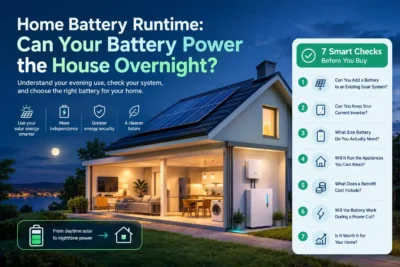
Czas pracy baterii domowej: Czy Twoja bateria zasili dom przez całą noc?
Czas pracy domowej baterii zależy od ilości dostępnej energii i tego, co zasilasz. Bateria może utrzymać

Modernizacja baterii słonecznej: 7 mądrych kontroli przed zakupem
Modernizacja baterii słonecznej oznacza dodanie magazynu energii do już posiadanych paneli słonecznych. W wielu przypadkach można zachować

Czy bateria domowa 5kWh jest wystarczająca? 5 niezbędnych kontroli przed zakupem
Bateria domowa o pojemności 5 kWh może pokryć umiarkowane wieczorne zużycie energii lub utrzymać wybrane niezbędne urządzenia podczas przerwy w dostawie prądu. Niezależnie od tego,
 English
 Polish
 Romanian
 German
 Dutch
 French
 Bulgarian
 Croatian
 Greek
 Czech
 Danish
 Estonian
 Finnish
 Swedish
 Hungarian
 Irish
 Italian
 Latvian
 Lithuanian
 Luxembourgish
 Maltese
 Portuguese
 Slovak
 Slovenian
 Spanish